



Most people blame their bladder for waking up at night. The real list is longer.
Nocturia, or nighttime urination, can be driven by nocturnal polyuria, bladder storage problems, sleep disruption, medications, sleep apnea, diabetes, edema, or evening fluid and caffeine or alcohol intake. A sleep supplement that makes you drowsy is not a proven fix for that problem. If the cause is urine overproduction, bladder dysfunction, or sleep apnea, sedation does not solve the underlying mechanism.
The Three Lanes of Nocturia
1. Urine Overproduction at Night
Nocturnal polyuria means your kidneys make too much urine at night. Normally, a hormone called vasopressin rises in the evening and concentrates urine while you sleep. In some people, that nighttime rise is blunted. The kidneys keep producing dilute urine instead of holding it.
Fluid shifts are another factor. When you lie down, fluid that pooled in your legs during the day returns to circulation. The kidneys see the extra volume and make more urine. People with edema from heart failure, vein problems, or long hours standing often notice this. The fluid has to go somewhere.
2. Bladder Storage Problems
Bladder storage problems are different from overproduction. The bladder may contract too often, hold less than it should, or empty incompletely. This can come from overactive bladder, prostate enlargement in men, pelvic floor dysfunction in women, or nerve problems. The bladder is not necessarily overfull. It is misreading its own signals.
3. Sleep Disruption and Medications
Sleep disruption is the third lane. Sleep apnea repeatedly wakes the brain. Each wake-up can trigger a bathroom signal. Some people think they woke because they had to pee. In reality, the apnea woke them first, and the bladder followed. Treat the apnea, and the nighttime urination often improves without a bladder pill.
Medications matter too. Diuretics, sometimes called water pills, are often prescribed in the morning for a reason. Evening doses, certain blood pressure drugs, and lithium can all increase nighttime urine production. The timing of your medication can matter more than the supplement you take.
Evening inputs complete the picture. Caffeine and alcohol are diuretics. They increase urine production and irritate the bladder. Drinking a large glass of water right before bed adds to the load. The body does not need that hydration while you sleep.
What About Sleep Supplements?
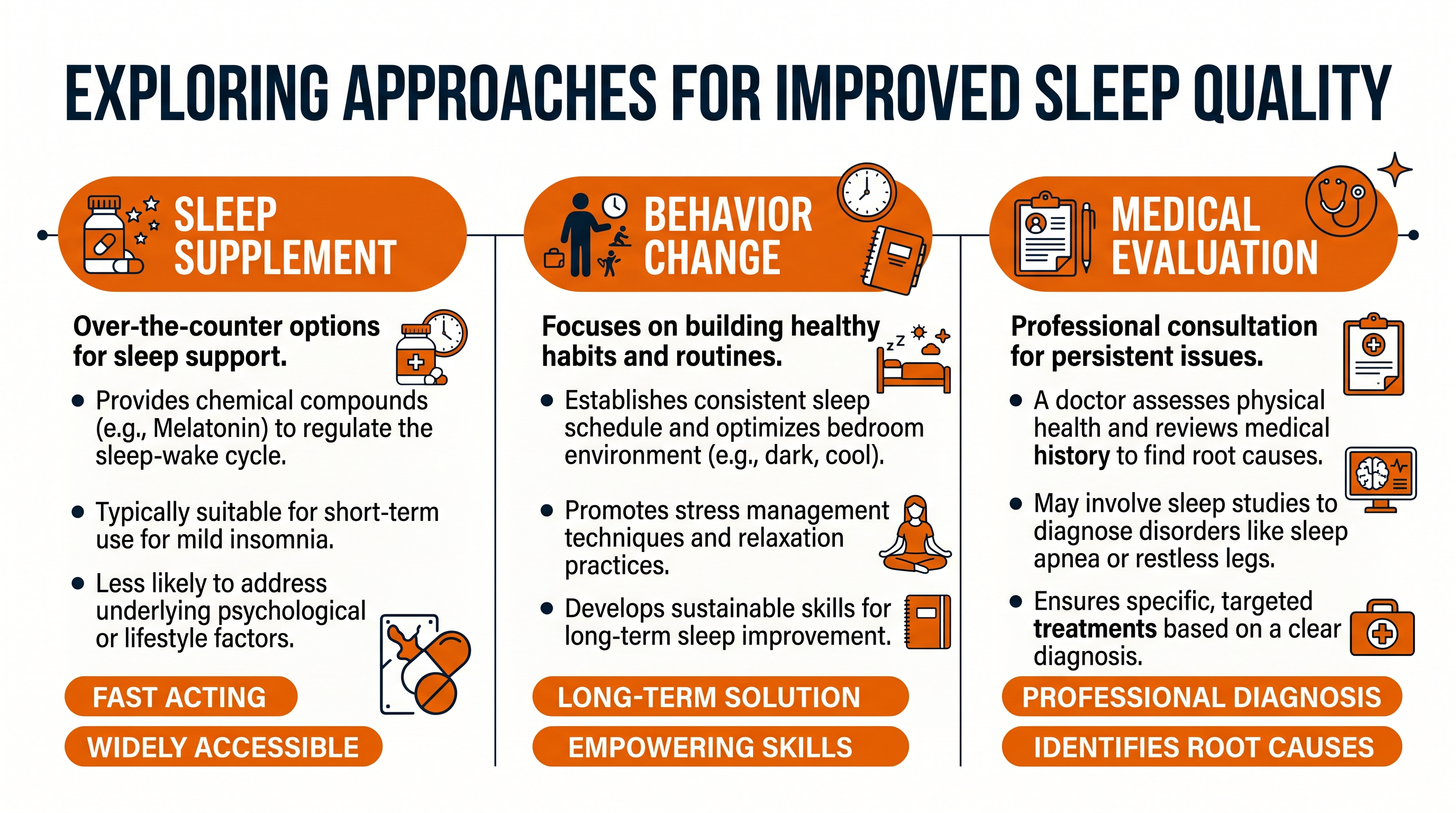
Melatonin may help if your sleep-wake rhythm is disrupted, but it does not directly reduce nighttime urine volume. Magnesium glycinate can support relaxation and muscle function, yet the evidence for fewer bathroom trips is weak. Some herbal blends are marketed for bladder and sleep together, but clinical trials showing fewer nighttime voids are sparse.
A bedtime supplement should not be presented as a proven universal fix for nocturia unless clinical evidence shows it reduces nighttime voids. That bar is rarely met.
This is not a debunking. It is a redirect. The right question is: what is actually waking you up?
Practical First Steps
Start with timing. Stop fluids two to three hours before bed. Limit caffeine after noon and alcohol within three to four hours of sleep. If you take a diuretic, ask your clinician whether a morning dose is possible. A small scheduling change can outperform a new capsule.
Address swelling. If your ankles puff up during the day, elevating your legs in the late afternoon can move fluid back into circulation before bedtime. Compression socks may help some people, but only under guidance. Gravity is free. Use it.
Check your sleep. Loud snoring, gasping, or morning headaches point to sleep apnea. A sleep study is the diagnostic step. Treating apnea often cuts nighttime bathroom trips before any supplement does.
Review bladder symptoms. Urgency, weak stream, dribbling, or incomplete emptying are flags. These warrant a urology or primary care visit, not a self-selected supplement. A simple bladder scan can reveal whether you are emptying fully.
When to Seek Medical Evaluation
Get evaluated if the problem is new, severe, disruptive, or paired with urinary symptoms, leg swelling, excessive thirst, loud snoring, or recent medication changes. Diabetes, heart failure, prostate issues, and urinary tract infections can all present as nighttime urination. Catching these early changes the treatment completely.
The Sleep Stack Itself
If anxiety or a racing mind is keeping you awake, a small dose of magnesium glycinate or L-theanine may help you fall asleep. If your circadian rhythm is off, low-dose melatonin timed correctly can help. These are sleep tools, not bladder tools.
For bladder support, pumpkin seed extract and saw palmetto have modest evidence for some urinary symptoms, but the research on nocturia specifically is mixed. These are category-level options, not guarantees. They are worth discussing with a clinician, not buying on impulse.
The Two-Week Protocol
The practical protocol is simple. Track your intake and output for three days. Include volume if you can. Even approximate timing helps. Note what you drank, when, and how many times you woke. Bring that log to your clinician. It is the single most useful thing you can do.
Then run a two-week experiment. Stop fluids two to three hours before bed. Move caffeine earlier. Skip the nightcap. Elevate your legs in the evening if you have ankle swelling. See if your nighttime trips drop.
If nothing changes, get evaluated. The answer is probably not in a bottle.
--- Disclaimer: This content is for educational purposes only and does not constitute medical advice. We do not diagnose or treat any condition. Always consult a qualified healthcare provider for personalized recommendations about supplements, dosage, and potential interactions.
Sources
- Supplements for Reducing Nighttime Urination - ConsumerLab.com
- 2022 Archived Clinical Updates for Vitamins & Supplements - ConsumerLab.com
- Daily use of sildenafil 50mg at night and nocturia - PubMed
- Sleep Supplements Reviewed by ConsumerLab.com
- AGZ for Sleep? - ConsumerLab.com
- Insomnia Supplements Reviewed by ConsumerLab.com
- Overactive Bladder (OAB) Supplements Reviewed by ConsumerLab.com
- Bladder Control Supplements Reviewed by ConsumerLab.com
Sources
- Supplements for Reducing Nighttime Urination - ConsumerLab.com
- 2022 Archived Clinical Updates for Vitamins & Supplements - ConsumerLab.com
- Daily use of sildenafil 50mg at night effectively ameliorates nocturia in patients with lower urinary tract symptoms associated with benign prostatic hyperplasia: an exploratory multicenter, double-blind, randomized, placebo-controlled study - PubMed
- Sleep Supplements Reviewed by ConsumerLab.com
- AGZ for Sleep? - ConsumerLab.com
- Insomnia Supplements Reviewed by ConsumerLab.com
- Overactive Bladder (OAB) Supplements Reviewed by ConsumerLab.com
- Bladder Control Supplements Reviewed by ConsumerLab.com